[00:00:02] Speaker A: Tea with Bre I'm trying to live my life I just need space to grow I'm just trying to make it right these people won't let me go I'm just trying to live my life I just need space to grow I'm just trying to make it right these people won't let me go Let me grow, let me go, let me grow, let me go they should know, they should know they should know, they should know I'm just trying to live my life I just need space to grow I'm just trying to make it right.
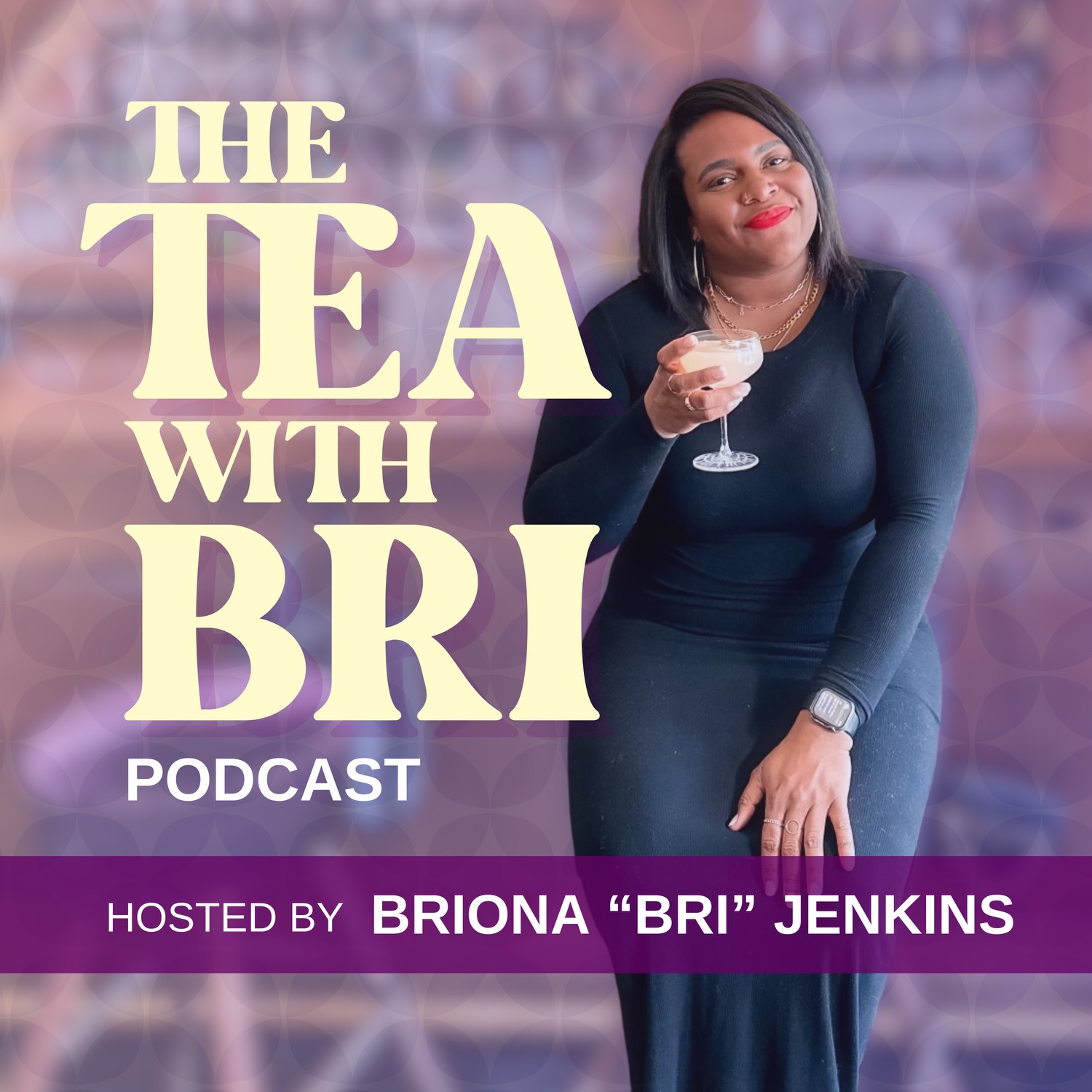
[00:00:51] Speaker B: Welcome to the Tea with Bri. I'm your host, Bri. Thanks for listening. The 2:3 podcast is focused on deep, honest and vulnerable conversation. Each week I sit down with a different guest in order to have those conversations.
Every week we'll start my guest's bio, an intro to how we know each other, and then we'll go into a deep dive conversation about whatever topic they brought to me that week. This week I'm joined by my guest, Jessica W. Jesse, who uses she her pronouns is a wife, mom, sister, aunt and friend. Jess lives in Connecticut with her six year old and husband of eight years, James. They've been together for 15 years. Oh, romance.
She's a proud union member of Local 34 and has an 11 year career as a senior administrative assistant. Jess is a recovered alcoholic. Her sobriety is 10:30, 2022.
Her passions include being of service to others, learning being with people she loves, and a regular yoga and meditation practice to just jump on in. Jess and I actually grew up in the same town, Hamden, but if you really know h town.
We went to high school together, but we weren't friends in high school. But we have so many mutual friends and we got really connected at Beck's wedding to Colin this past September. So, Justin, I were talking at Janelle's birthday and we were like, let's, let's have you on the pod to talk about life. So. Hello, friend.
Hello.
[00:02:09] Speaker C: Thank you for having me. I'm really excited to be here.
[00:02:13] Speaker B: Me too. Thank you for saying yes. Everyone's like, you have to have Jesse on. I was like, obviously I want everyone on, but specifically Jesse. So I'm really excited.
[00:02:22] Speaker C: No pressure though.
[00:02:23] Speaker B: No, it's just me and you. Yeah, just you and I having a conversation.
When before we hopped on, you were saying we need to talk about how I moved back home to Connecticut and you know, that's a great question.
I was in Austin for eight years and absolutely loved it. But then politics. I Was getting older. All my family's still here.
[00:02:46] Speaker C: So eight years is a long time.
[00:02:48] Speaker B: Eight years is. I was 26 when I moved there. I knew nothing of life. I was a wee baby, which is almost 10 years ago now, which feels hurtful, but, yeah, kind of moved there on a whim. I knew one person and I was like, let's just give it a try. And then ended up being there for eight. And I loved it. I loved my time in Austin. I was talking to a friend today. I was like, would you go back? I was like, it would take a lot for me to go back to Texas.
Specifically. We're talking because one of our former co workers is now the executive director of the organization we're working at. And I really, really love them. And I was like, if they called to come work with them, I would do it like one organization. But there is no intention for me to go back to Texas. I am looking at other places, but it would be like, I think, like New York. I went to Chicago in October and loved Chicago, but it's so cold, I think I would die.
[00:03:41] Speaker C: It's cold. I have a sister there, though, so if you're ever interested in going and chatting about it, she's lived there, I don't even know, over 10 years now.
[00:03:49] Speaker B: So, yeah, I'll be chatting with her. My high school best friend lives there. I went to go visit him and his husband, which is how I went out there. And then one of the really good friends from my last job lives there. Friends from Austin live there. So I have, like, a good group. So I would add to the list because, yeah, I went in October and It was like 80 and beautiful. And they were like, this is because in the winter it is gnarly. I was like, well, if it's 8 degrees here right now, I think I can live with Chicago cold. But.
[00:04:16] Speaker C: Well, I give you a lot of credit for that. You know, I. I have siblings. I'm one of five kids and three out of the five of us did move out of state. My brother moved back to Connecticut, like you, after five years. But I've done a lot of change in my life. But picking up and leaving. I've never left Connecticut. I've traveled a bunch, but I've never moved any. I moved to Southington, which is about 20 minutes from Hampden. So that's as far as I've gotten.
[00:04:44] Speaker B: I think even doing that, like, just leaving your hometown teaches you a lot about yourself. Living so far away from everyone and everything. I knew at that age Was so transformative for me. Like being in a whole different state, coming out, like all these different things happen because I was like, I get to just like exist to like live and build this new life. So I think everyone should move away at some point. Even if it's just like two towns over.
I just think gives you perspective. If it's for college, if it's for anything. I just think if you can do it, you should do. Yeah, yeah.
[00:05:13] Speaker C: Which was different for me because I didn't. I don't have a four year degree. I didn't. I dropped out of school, which is part of my story. You know that we're going to talk a little bit about this evening, but.
[00:05:24] Speaker B: Okay, well, let's, let's just jump on in. Let's tell me all about it. I love having conversations like this. You're the third friend I've had on talk about their sobriety journey.
[00:05:35] Speaker C: Oh, I listened to some of the episodes. I'll have to go back and, and find those. Yeah.
[00:05:40] Speaker B: My friend Yumi, we talk about being sober curious because they kind of don't really drink and they aren't like, they just don't like it. So they don't really do it too often. And then my friend Bri has been sober.
I think she just had her five year sober anniversary.
[00:05:55] Speaker C: Wow, that's amazing.
[00:05:56] Speaker B: Don't quote me. I think it's five.
[00:05:58] Speaker C: Yeah, five years is a big deal.
Listen, a week is a big deal.
[00:06:02] Speaker B: One day. Exactly, exactly. So, yes, take us through how you got here, what the journey has looked like. Whatever you want to share. The.
The world is the. The platter is yours.
[00:06:11] Speaker C: Thanks, Brie. Well, thanks for giving me this platform to be able to talk about sobriety. I'm. I'm really passionate about it because I never thought that I could have a life that I have right. Right now. And you, and you mentioned sober curious. And that's kind of part of how I got here and how I decided to get sober. I, or actually I was like beat so beaten up by alcohol that I decided what we call a surrender. I just surrendered and said, I can't live my life like this anymore. Something has to change.
[00:06:45] Speaker B: And
[00:06:49] Speaker C: part of that was as I got older, in my 30s, I got sober at 36. I'm 39. I'll be 40 in May. Cinco de Mayo.
[00:06:59] Speaker B: Looking great, by the way. I was like, your skin right now is glowing, by the way.
[00:07:03] Speaker C: I think it's the lighting, but thank you.
And for a long time I had my first drink when I was 11.
And so I was somebody who started very young.
And when I had that first drink, all the anxiety I felt, all the pain I was feeling with living in a, in a household with a parent who had a substance abuse disorder, and the anxiety that was around that, the trauma that was around that, that drink immediately, like, took those feelings away.
And I chased that feeling for 22 years.
And everything I was looking for in a bottle is something I had that I found through the 1212 step recovery program. And I'll talk a little bit more about that in a moment. But I didn't even really know that alcohol was an issue in my life till I got to be like 31, 32. Like, it was never the alcohol. It was always like, if you had my life, you drink too.
I grew up in a house with a father who had a drug problem. My mother died when I was 21, within six months of getting diagnosed from cancer.
My dad, you know, suffered a lot of health issues and we had to take care of him after my mom died. That wasn't what was supposed to happen. And then I lost my dad at 25. Like, my life is so sad. You would drink too. So, like, alcohol wasn't the issue for me for a long time. Like, I lived in a denial. I lived in a lot of self pity, you know, and I decided to, like, well, I think having a child changes things. I think having someone in your life who loves you unconditionally changes things. And, and two of both of those happen. You know, I met my husband at 25 and he, he likes to party and hang out and go to bars and all this stuff. He couldn't quite understand how I could stay up hours, you know, hanging out and drinking and, and partying. And he was like, I get so tired. You don't get tired.
[00:09:09] Speaker B: And I'm like, no.
[00:09:10] Speaker C: You know, I, I, I just was chasing, chasing that drink, chasing that drink, chasing that feeling that I had at 11, that emptiness. I wanted it gone.
And as he matured and we started having a more mature life together, it made me start questioning. Like, I drank and drove last night. That's really dangerous.
I did, you know, whatever it was. I said something really inappropriate and was flirting with a guy in front of my husband, like, and he called me out on it and all these things where I was like, maybe it's the alcohol.
And then I really started to get tortured by, like, my mind was so tortured because I couldn't stay away from it.
I couldn't stop drinking. And I knew it was Affecting my relationship, my. My job, my life, my mental health. Like, I'll tell you, and I'll be really honest with you, and I want to be honest to the people who are going to listen to this, because that's to carry a message of recovery and sobriety the way that I've learned as you share, like, your. Your depth of where your alcoholism or drug addiction, you know, whatever it is, has taken you. And I remember waking up one morning, and this was the. The summer before I got sober. So it was soon after I. I surrendered and I looked out the window and I had a headache. I felt like crap. I think my husband James was probably pissed at me because I did something stupid the night before.
And I thought dying would literally be easier than giving up drinking. I wasn't gonna hurt myself or anything like that. Yeah. But my mind literally took me to a place where I was like, I'm probably gonna drink today. So I. And I don't want to because I know everyone's mad at me or I feel like everyone's mad at me, and I feel like crap, and. But I think if I just died, it would be easier because I know I'm gonna drink today, and that's a really scary, unmanageable place to be.
And my last drunk, I took my son to, like, a minor league baseball game and decided that I needed nips. So I snuck in, which are small little bottles for people who may not be in the Northeast. I know they're like tiny little, like, shooters. I've heard people call them. Snuck those in, Drank. It was like a one o' clock game. Drank tons. Like, once I have that first drink, I can't stop. My mind just wants me to have more and more and more. I'm chasing that feeling. I'm chasing that SOL that I'm looking for in the drink.
And I did all the things besides get arrested. I threw up. I blacked out. I fell and got hurt.
Like, smashed my arm, my face, my phone shattered into a million pieces.
And I woke up. I don't know if you know that feeling, but there's this feeling, like, from a bad drunk, even if you're a normal drinker, if you drank too much, where you wake up and you're like, oh, my gosh, what the heck? You have, like. And I woke up and I literally said, I can't do this anymore. I cannot live this way anymore.
And I decided to sign on to a Zoom 12 step meeting.
And I've been going to that meeting and working with the same Woman who's my sponsor ever since.
And I haven't had a drink since. And that was October 30th of 2022.
And it takes work, takes action. You know, I, I'm a big believer in a 12 step recovery program.
It had bought me to what I call God, but it's probably not the God you believe in or maybe people listening to this. And it doesn't have to be really defined or it could be really defined. That doesn't, you know, a higher power, we say too, you know, it's something bigger than Jess, which is something I needed to keep my mind off, away from that drink, because my mind will bring me right back to a drink.
And I got really honest, I got willing, I got open minded. And I went through the 12 steps. I did the steps pretty quickly, didn't drag my feet.
And I have such a beautiful life. And now I give back to the same 12 step recovery program I'm in now. I'm, I'm service. I sponsor a lot of women. I speak on sobriety. I, I speak in our fellowship about my story and my sobriety. And it gives me a lot of purpose, it keeps me sober.
I go into treatment facilities, detox, rehabs, and just have literature. If people have questions, I'm happy to answer. You know, talk about the program that I'm, that I'm in and the fellowship that I'm a part of.
And I don't think about a drink. I mean, yesterday was Super Bowl Sunday, right? And I kind of joked with my husband. We made a joke about. And I guess it's not funny, but it's funny when like it looked, you know, in hindsight about a time we went to a party and I said to a member, I was throwing up and like rolling around in the snow that night and you were like, get back in the car now. And I said, imagine tonight you don't have to worry about that anymore.
And that's, that's the person I am saying. I'm a woman with grace and dignity and I wasn't a bad person then, right. I did really bad things.
Really bad things that I don't even want to speak about on this. You know, I'll talk, we could talk offline or if anyone wants to reach out to me after this, like, I'm, I'm happy to share my full story, but I, I don't remember where I was going with that. But you weren't a bad person.
Yeah. Yeah, but I did. I. Oh, I was a sick person.
I really truly Believe that, you know, and the medical association has alcohol abuse disorder, substance abuse disorder, you know, and I was sick. My mind was really sick, and I was spiritually sick, I was mentally sick, I was bodily sick. And it was a really exhausting way to live.
And I don't, I don't live that way anymore. You know, I try to find gratitude and love and patience and in things. And I don't worry about that first drink anymore. And chasing that feeling what, that feeling that I was chasing for so long in that bottle I had found. And having a spiritual life and being of service to other people and it's really beautiful. And I can go to the super bowl and eat my face off and have so much fun and not care. Like, people will say to me, this must be really hard. You know, I just lost my niece and. Which was awful. And people would. And I appreciate it. I mean, I love that people will check in and be like, are you okay? Like, do. If you need to talk, you know, you could talk. And, and because I continue to work in the fellowship and in my program and enlarge my spiritual life, stay close to my higher power. The thought of a, you know, a drink is not an issue for me anymore. And that's what, you know, this recovery journey that I've taken, I know people take, you know, there's many different ways of getting sober.
I'm a big, big, big advocate for a 12 step program. If you can do it another way, that's cool. I tried a lot of different ways and it didn't work for me. But if it works for you, like, that's cool. I'm totally, you know, I don't want to like, hijack sobriety. 12 STEP program has, has changed everything for me, but I don't, I don't, you know, alcohol isn't an issue for me anymore. An issue for me is like, am I being so self centered? Am I only thinking about myself? And then I can be my own critic and I have to get out of my own head.
And that's a whole other topic that we can talk about another time too. But that, so that's, you know, that's how I got here almost three and a half years later. And I do it one day at a time. I continue to go to meetings. I continue to be of service to other women in the fellowship and in my life. And, and I continue to carry this message, you know, this message of, of recovery is possible if you're open minded, willing and honest.
[00:17:48] Speaker B: Yeah.
One, thank you. Because I feel like there's so many things there that people are going to relate to. And I think it's so human of, like you said, your first drink was 11. Mine was my 16th birthday.
And, like, I've had friends who have started drinking younger. And what that has done to a lot of us who are having this conversation now, I think specifically in, like, the millennial next generation, like, our generation of people who are like, do we even like this? Like, is it a thing we just, like, saw people doing is, like, to have those conversations now, too, and to have so many friends who are sober or sober curious, especially. When I lived in Austin, we had a lot of queer people come together and, like, what can we do besides going to a bar that we're. Requires drinking or, like, all these other options, like, and looking for other options.
And I think it's because a lot of us either saw our parents or grandparents or other folks or ourselves who had problems with alcohol. And, like, you're saying, like, it is a problem. Like, I think people who are just like, you can just stop drinking. I'm like, no, it's a literal diagnosis. It's like any other addiction you would talk about. I'm like, I don't think anyone chooses to have this happen to them. And so I think a lot of people hearing this and being able to humanize it so much. I think there's so much misnomer about it of you stop drinking, and then that's it. I'm like, no, that's a. It's a date. Like, you're saying, it's one day, one step at a time. There's a. There's a different journey for everyone.
And what you said about, you know, the spirituality. My friend Bri, who I mentioned before, I grew up very religious, and now I'm.
[00:19:21] Speaker C: I don't.
[00:19:21] Speaker B: I will say I'm spiritual. I believe in a lot of different things, which me too. It was just a whole different.
We could talk down that rabbit hole, too.
But I. I believe in a higher power. I believe in reincarnation. I believe in paying it forward. I believe in, like, the neck. Like, I just believe in too many things. I don't think any one of us has it 100, right?
But when Bri started going through this journey, she reached out to me. She's like, hey, you were raised really religious. Can we have a conversation about spirituality?
I was like, yeah, sure. Because she started to experience the whole. The same thing with, like, a higher power spirituality, something bigger than herself that I think is really beautiful, especially what the Way I was raised around religion, it's not about you're a good Christian or a bad Christian. It was about you get to be in relationship with other people who have their own relationship. Like, it was never this judgmental sort of like power trip around religion and control. Like, I think that's my issue with organized religion is that for a lot of people it is so controlling to keep us in boxes, which is a whole different diatribe I can go down for.
[00:20:26] Speaker C: Yeah, I grew up Irish Catholic. There is a lot of hill around, you know, confessing my sins and saying my Hail Marys, which if that's for you, that's cool. It doesn't work for me.
[00:20:38] Speaker B: I. And like you were saying, like, I am like. So I started therapy when I was 16. Like, I am very self aware. I have been 20, like 20 years now. On and off in therapy is like, I. And one of the most self aware people you ever meet. Like, I'm always like, am I the problem? Like, do I need to own this and take anything from this? My therapist, like, no, girl, like, if you could graduate from therapy, you would graduate from therapy, right? Yeah, I was like, those conversations too. So I think about all this a lot when we talk about sobriety and the journey and like, I've been the person who's like, gone out with friends and I just choose not to drink. Like, I have fun on my own. Like, it's just, I don't need it.
And so I have some friends who've been questioning if they should try sobriety or if they're. I'm like, what's the harm? Like, if you, if it's a thing you want to, you know, look into, I'm like, there's no harm. And if you see that this is not a thing that you need, I'm like, there's so many options for you. But I think for me, as a person who is not on the same journey, I think there's just like, I've heard people be like, it has. If it's not this way, it's the wrong way. So for you to be like, there's so many different ways to do this, I think is really helpful. My first. Yeah.
[00:21:41] Speaker C: And if I, if I'm honest in the. Well, no, I don't want to get into that actually, because there, there will be people that will say the 12 step way is the way, you know, and actually in the text that we have and, and what we read, it says that, like, we don't want to be the people to say like, you can't get sober. Like, this is the only way for you to get sober. So I think if you do try, like, what I would say about the way I've I my journey on recovery, if you do try, try a 12 step program. There's meetings for all kinds of people. There's meetings for women, for men, for people of color, for LGBTQ people. Like, you can find your group and, and. Or you could go to a mixed meeting or, you know, it doesn't. If you don't want something specified, you can just go and listen. And there's speaker meetings and all different sorts of. Like, there's millions. And that's what I tell the women that I work with. Like, there's millions of meetings. You're going to run into people that are sick.
[00:22:38] Speaker B: Right, right.
[00:22:39] Speaker C: Alcoholics are sick people. So they're gonna hijack it and say, you should do it this way, you should do it that way. And 12 steps is the way it is. But keep an open mind. Keep, keep. If you go down this path, keep an open mind and get to a person that sounds like that you want, like, what they have and talk to that person. Find your people in this fellowship if that's, if that's the route you want to go. And that will be a really big key. You know, I surround myself with women that have stories that maybe they started at 50 and got sober at 70 or they started at younger than me drinking or, you know, they had their kids and raised them and then they were stay at home moms or they, you know, I have women on friends with that have been locked up and in, in and out of institutions and are sober. Like, we come from all walks of life, and those are my people that I have found.
And so if, if you go this route or in any type of program that you're in, like, find your people. That's. And I found people like you, Bri. I found Becca. I found, you know, Collins sober now. Like, we grew up. We grew up together drinking and partying and. And a lot of the people around me. Yeah, like you said, are either sober. Sober cur.
Circle back to the sober, curious thing. When my husband started to mature, I kind of got on a different tangent.
I started to do, like, prayer and meditation. And you shared that. I do yoga practice. And I. And I thought if I did all these things that, like, I would get better. That, like, I would decide that I'm not going to drink and actually not drink that day. And I tried to be sober, curious, and it worked. Maybe for some time, but I always went right back to the drink.
So that's like where. And we don't have to get into all that, but like where alcoholism and out. Being an alcoholic may be different from some people who are heavy drinkers or, or something, but being sober, curious, it was a push that got me to come to where I am now and practicing meditation and that self awareness and therapy, like, is that little. I call them, you know, God shots, you know, little, like higher power shots that like, pushed me slowly and slowly, like a seed was planted and it took. And so that morning after I got sick and blacked out, threw up and everything else and the whole shebang, when I said I was done, you know, after all that time of that being sober, curious and trying to practice these, these practices that I knew were supposed to help me feel better, and I didn't, I said I was done, done. I really meant it. I could feel it.
And when you think about, like, you being 16, me being 11, like I have a 6 year old now, like, you're only here on Earth for 16 years and you're putting like this poison into your body.
Like we were so young and. And I know kids still do it now and, and stuff, but like now when I reflect back on that, like I just a child, well, the, the
[00:25:54] Speaker B: escapism and chasing the rabbit, like, mechanism.
I remember I was at a friend's house. Not gonna say what friend's house, but their mom was such a heavy drinker that we could go to the packer store by their house and pick up alcohol for her.
Like, they wouldn't. They knew who she was. Like, you can go get it. Like, and we would go. They wouldn't card us, like, oh, you're blah, blah, blah kids, okay. And like, you know, this was the early 2000s, so, you know, different times.
But yeah, the first time I drank was my 16th birthday. My mom had died the month before.
[00:26:25] Speaker C: Oh, I'm so sorry. I didn't know that.
[00:26:27] Speaker B: Yeah, my mom passed when I was 15, turning 16 and so kind of the same thing. I was just like, I need to like, be a kid. Like at that point. She had been sick on and off since I was nine. She was sick all of my sophomore year and ended up passing towards the end of my sophomore year.
But it was like, if you weren't a close friend of mine, you didn't know. Like we. I. It wasn't a thing I shared. I was always in school, like, got good grades, was still super involved in all the things and I remember after she died. Quick tangent. Jamie, one of our mutual friends. Yeah. Was so mad at me because Jamie's like, we could have been talking about this because her mom was sick. Yeah. And it was just like. But you. You know, it's such an isolating feeling, like, having a sick parent when you're so young. Like, it's like your parents supposed to live forever. Like, what do you mean? Like, your parents supposed to be, like, bigger than anything. Like, your parent is your parent. Like, you don't really know them as a person to you become an adult or come older. And like, I've seen that now with, like, my godparents and, like, my aunts and uncles as I've gotten older. Like, oh, you're. This is also your first time here too. You're a human. And like, as a lot as I've gotten older.
But it was the same thing for me. Like, I wanted an escape. On my birthday, I was like, I'm 16. That was I. The first drink I had was also the first time I threw up from alcohol at 16. Because they're saying, it's a point. There's a reason the drinking age is 21.
Because you were a child.
And like, my dad was checked out. My parents had been together for a long time. My dad started dating right after my mom passed. Like, he was on his own journey that I have completely unpacked in therapy. Everyone, don't worry.
But to now, like, look back and like, you say, like, I have. I live with my godparents, and they have four kids. They're basically my siblings. And so my younger sister has four boys. Then her oldest is just turned 17. And so we have a lot of honest conversations around, like, drinking and drugs and all that thing. He's like, I'm an athlete. Like, I'm not putting in here. I'm like, attaboy. I'm like, but if someone, you know, someone, like, have the conversation and keep that open, because I'd like. I would rather you come to me and have the conversation and let me give you some of my learned experience in life advice. I'm like, I want you to have the chance to be a kid that I think so many people in our generation were robbed of because our parents were busy or had multiple kids or, you know, they were dealing with their own things. I think we all had to grow up so quickly, and being able to do that to that for the next generation, I think is so important. And I tell people, my friends who have kids, I'm like, don't I'm like, just be a present parent. I go. I was like, you're not going to get it perfect. I go, but as a person whose mom died and dad. My dad then abandoned me emotionally, I'm like, just be present. Like, it's not going to be perfect. Tell your kid you love them. Be there for them. Like. Like, I think that would have saved me a lot on my own journey through drinking and therapy and all the things.
[00:29:06] Speaker C: But, yeah.
[00:29:06] Speaker B: I just think there's just so much there that I think a lot of, like, you said, our generation are talking about, because we, I think, as a generation, grew up so quickly and had so much pressure on us already that I hope this next generation is growing out of. But I'm also. You cannot pay me to be a kid in high school right now. I just.
[00:29:24] Speaker C: No. And I. And I. I feel for kids and you work with, don't you? Yeah.
Yeah. It.
The exposure that they have to each other on a constant basis, I just. Yeah. I can't.
[00:29:39] Speaker B: Well, I'm also, like, we didn't have social media in high school. We had just got Facebook.
[00:29:43] Speaker C: They're in each other's business, but they
[00:29:45] Speaker B: don't have to talk to each other either. This is a different tangent.
[00:29:48] Speaker C: Yeah.
[00:29:48] Speaker B: It is so interesting to watch teenagers together. I'm like, do you two. Like, do y'. All. They could be in the same room. We'll not talk, but we'll be texting each other. And I'm like.
[00:29:55] Speaker C: Or sending Snapchats. Yeah.
[00:29:57] Speaker B: Like, he's literally next to you. Like, what are we.
[00:30:01] Speaker C: First, I want to acknowledge you losing your mother. I'm so sorry. I did not know that was part of. Part of your story. And it's really hard, you know, as a woman to lose your mom and as. Do you have siblings?
[00:30:13] Speaker B: Only child. Yeah.
[00:30:15] Speaker C: And as, like, someone, like. I'm just getting to the point in my life where I now have lived more than half of my life without my mom.
[00:30:24] Speaker B: Yeah.
[00:30:24] Speaker C: You know.
[00:30:25] Speaker B: Yeah.
[00:30:25] Speaker C: Or I've lived. Am I saying that right? Yeah. I've, like, lived longer than, like, I did with having my mom in my life.
[00:30:31] Speaker B: I just hit. Yeah. This year. Yeah.
[00:30:33] Speaker C: Yeah.
[00:30:33] Speaker B: So I just turned.
[00:30:35] Speaker C: It was.
[00:30:35] Speaker B: Oh, no. So it was 20 years. So.
[00:30:36] Speaker C: Yeah.
[00:30:36] Speaker B: She passed 16. So it happened a couple years ago.
[00:30:40] Speaker C: Yeah.
[00:30:40] Speaker B: Yeah. And I. She'll. She passed when she was 40. So, like, every year I get closer to 40. That kind of. With my brain a little bit.
[00:30:46] Speaker C: Same. Yep. My mom died at 52.
[00:30:49] Speaker B: Yeah. It just gets. And it's. And it's such a, Especially like you said, like, as a girl with your mom. Like, my mom and I were very, very close.
And so that's so hard. It's so hard.
[00:31:01] Speaker C: It is. And I still miss her, you know, And I don't think that will ever change. I've gotten used to it. Right. And I've done the therapy and done the things.
I, I'm one of five kids. Like, I can relate to, like what you're saying, like, with bigger families or parents who just work a lot. Like, I'm one of my kids. My dad worked nights, my mom worked days, and I just wanted attention so badly.
[00:31:27] Speaker B: Where do you fall in the lineup?
[00:31:28] Speaker C: So I'm a twin too, right? Yeah. So, but technically I'm, I'm the baby of the girls, so I'm the fourth child because I'm the second twin. So. Caitlyn Haley, Molly Jesse Tyler.
[00:31:41] Speaker B: Yeah, I know. That poor boy by himself.
[00:31:44] Speaker C: Yeah, the baby boy. And in our, in our steps that we do it, you do a four step. It's an inventory. So, like, inventory has been part of practices and religions and everything. You know, you think about confession and these sorts of things. I mean, it's, it's structured differently, but it's been part of like these different practices for a long time. And you kind of write out like, your, the people that you have these certain feeling towards resentments or, or, and you know, my mom was on that list and, and part of that was like, why didn't you intervene? Why didn't you help me get help? Like, I was drinking heavily by like 16, 17 years old, and she knew it.
And I just, like you said before, like, my mom was a human. My mom was tired. My mom, you know, she probably thought it was just a phase.
I, I can't speak for her now, but like, I, I, I don't want to say forgive because I, I don't want to make it seem like she was doing something wrong.
But, you know, I do, I, I, I forg.
She is a, A person. Right.
[00:32:49] Speaker B: Also because you're a mom now too.
[00:32:51] Speaker C: Yes. Yeah. Yeah. And I have one child because that is the attention that I give. Yeah, yeah, yeah. And she's the, the, the love of my life. And I, and I try to be very present, like you said, as much as I can.
[00:33:05] Speaker B: Yeah, I think about this a lot too. Like, my dad and I have no relationship. We haven't since I was 18. We've been, we've tried here and there, but I think for me, having gone to therapy and now unpacking him and his side of the family. My cousin Avery's actually going to come on. We're gonna do a podcast about our family, which is going to be interesting because they are.
There are people. They are people doing their best, is what we're going to say in today's episode.
And, you know, she isn't my sibling, but Avery was always with, like, with me because her older sister is eight years older than her. Avery and I are three years apart. So she was basically my baby. Like, she's always with me.
So, like, we'll check in sometimes. Like, did this actually happen? Like, to be able to, like, go back and forth and talk about that stuff? And so I was going through some therapy around my dad.
I was dating someone, and I, like, met her family, and they have their own stuff, too. But, like, to see her and her dad were going through things, but her dad would show up and try and keep trying.
So the first time I met her dad, we went to dinner. And I don't know how he got on the topic of my dad, but he and I were talking. He's like, as a dad of daughters, he goes, I can tell you your dad loves you. He goes, I don't know this man. He's like. But I'm sure it hurts him. So now I'm crying in this bar in New York City, and we're like, how did we get here? But it was, like, such a cathartic conversation. To see this man who looked at his. His daughter was like, I know I will be making amends for everything I have done, but I'm showing up and trying. And that was so healing to, like, just see a dad who takes ownership. Because my dad has never. I don't know if he will ever.
And so I think that's the thing, too, of, like, in my spirituality journey, of, like, forgiveness, of moving forward, of, like, I can say that, like, my dad did his best, but also he didn't do enough. And I think both things can be true.
And like, you were just saying about forgiveness, like, he wasn't a bad person. I just think he did what he could do with the capacity. Because I'm like, he lost his partner and then was left with a child who. I look a lot like my mom. So I'm sure that was a mind fuck.
And then, like, my dad started dating right away, so I think he was trying to fill that void. I think he thought it was what was right for me, and it wasn't. And, you know, we live and move forward and we learn lessons.
But I think about that a lot too. Like, if I have a kid, which is a conversation my partner and I were having, like, if I have kids, I don't know where I am right now, if I would trust my father enough to be in our lives. I was like, I don't like who I am around him. And so I don't know if I fully forgiven him yet. And so you saying forgiveness brought all this up to me. Yeah, of, like, that step in this. Of, like, I have forgiven you for what you have done, but I don't know if I've forgiven you in totality yet.
I forgive you enough to, like, wish you well, but you can say over
[00:35:56] Speaker C: there, yeah, I think, like you said, both things can be true. I mean, I've learned that in the. The amends process too, and that it's not always about, like, having this beautiful relationship afterwards. But what somebody said to me about resentments is it's like, you.
You have someone in prison, and. But you're standing guard, so, like, you're holding on to it and. And keeping. Keeping them in prison, but you're standing right outside, so it's holding you in prison too. So, like, I think two things can be true. I think you can have this healing amends, forgiveness with your father. Right. But you have boundaries because of what you've learned over the years.
And sometimes, like, that for me, like, that people pleasing, wanting, you know, wanting them to like me, wanting them to say, wanting. Maybe that little girl inside of you wants that love from him, that maybe he's not just not capable of giving. So, like, older knows better. Brie is holding that up, and it's like, okay, hold on. Wait a minute. Let's not set false expectations on somebody.
[00:37:06] Speaker B: Yeah, the people pleasing part is real.
[00:37:07] Speaker C: Like, oh, I'm. Yeah, Yeah, I work on that every day.
[00:37:10] Speaker B: That was a big part of my therapy, which is, I think, why I left. Right. Like, I moved away, and I was like, I'm gonna live my life for me. Like, I have. I owe no one anything. I'm gonna move away. I want to start over for myself. I live this life authentically. That was at 26. The pandemic hit when I was 30. I did a. I did some inventory when I was 30 of, like, who am I outside of every relationship I own and I'm in. Who am I? Sort of my job. Like, I got to the root of who Brianna is outside of everything.
And so, like, now on my journey, I'm very much like, I just want to experience as much joy as possible. I saw somewhere like this last, like, you get 80 summers if you're lucky.
[00:37:49] Speaker C: Oh, wow. You get like 80 years.
[00:37:51] Speaker B: And I'm like, well, I'm damn near halfway done at this point. I'm like, I'll be damned if I am not living them joyously because I. I truly believe that life is a gift. But like you said at the during your story of like, as a person, I have depression, but mine's like, I have high performance depression. So the sadder I get, the more things I do so I can avoid the sadness and, you know, trigger warning. I have never, not since I was 20 something, have I had an idea of harming myself. But I had that, you know, I was still some. Ever so often I get dark. I'm like, what would the world look like if I didn't exist? Again? No plan. But that's like a part of the mental health part, right? Of like. And Gabrielle Union talks about this in her book too. Of like, she was. Her depression was back. Like, if I die tomorrow, they would be nothing without me. And it's like that sort of like, what does this look like? Where's that voice coming from? And I don't think enough people talk about that. Of like, I have no intention of harming myself or shaking my life. But sometimes you just get to such a heavy place that you have that thought. And I think it needs to be acknowledged and talked about because I think everyone just thinks, especially if you've gone through a lot, like, you've suffered the loss of a parent, you're on a sobriety journey, you survived in eating. Despite all these things, you've survived. You're so strong. I'm like, yes, but I'm still a human being who's going through life. I'm not invincible. I think that's a really big, important thing to talk about too. You are allowed again, every one step, one day at a time.
And life is hard. Like you were saying, like, life is hard and it shouldn't be this hard. But I think that's part of the, the other side too. Like, life is so hard. And then you look at it from a spiritual side of like, if life is so hard, what's the other side look like? What's the joy? What's the. And that's why I try to lean in every day. Like, I'm trying to have a joyous peace every single day of my life. Because I'm just like, it is such a gift. And I think that comes from my mom lived that way like she was. So live every day like it's your last. And so I've been doing that since I was 16, sometimes to my detriment.
[00:39:44] Speaker C: Right.
[00:39:44] Speaker B: But, you know, literally. But, you know, here we are. We're fine.
[00:39:50] Speaker C: I also just have a lot of acceptance in my life today. Like, I just have to. You know, losing my niece was one of the hardest things I've been through since probably losing my parents. And.
And though. Though it's horrible, it's heartbreaking, it's terrible. Right? I. I accept that that is something that has happened. That. That. That that is her life. Like, it doesn't have to be fair. It doesn't have to be something that has to be explained to me. And I think I wouldn't have. I wouldn't have that piece. Like, there's a piece about it. And it's not that I'm not sick over it or anything, but I accept that this is what happened, you know, And I really live my life that way now, as much as I possibly can. That, like, if it's. You know, if this, in this moment is what's. What's happening in this moment, then. Then how.
How can I best use it to be useful to other people? How can I best use it to help myself grow, continue to grow?
And how, you know, how can it get me closer to this spiritual life that I'm trying to build? Like, how can I lean on that. That higher power that. That God, that of my understanding to. To get through it, Right? And before all that, before. And I know it sounds like a bunch of hocus pocus, but it's really worked for me. And I've seen it. I've seen these God moments in my life. You know, I.
I can't not deny that there's something bigger than me.
And I'm. I'm really.
I don't know why I keep losing my train of thought. I think just because this conversation is just so beautiful and robust and we've touched on so many different things, but I've leaned on that. Here we go. Before, all that would have been the drink. I would have picked up a drink if, you know, I would be taking shots. I would. Happy, Sad. Hard.
Can't accept it. No. Peace. Peace. It doesn't matter. Any emotion, that. And I have trouble even putting words to emotions because I suppressed them for so long. I'm. I'm learning how to do that now.
I would have just turned to alcohol for that.
And now I have this practice in my life of. Of Acceptance and prayer and meditation and leaning on others, leaning on people like you and the people that I love in my life and. And showing up for them and then allowing them to show up for me, too, because I'm not someone who used to be good at asking for help or saying, sharing these sorts of things, even out loud.
And just to circle back to the dad thing quick, you know, I like to always say too, like, my dad is not the villain in my story. A lot of my trauma comes from his drug abuse and stuff with us growing up.
But I also can understand that he was a sick person and had, you know, he had struggled with. With heroin since he was 16 years old.
I can't imagine how difficult that must have been for him. And then he built this life and got sober and had five kids and fell in love, and he got a surgery where he was prescribed painkillers and that kind of real, you know. Yeah, I'm not.
There's no blame, but on doctors or anything. He also knew he had a drug issue, so.
But. But I learned a lot from him, and I think he did the best he could. And he did show up, you know, for me, for my father. He did show up, too, in a ways, and. And being our coach. And he was a good. You know, I would say he was a good friend. I don't know if he was like this great fatherly figure, but, like, I would be able to turn to him and be like, this is going on. Like, what's your insight on that? And so I really appreciate those moments with him.
And, you know, I pray about it now. I pray. And praying for me is like sitting in quiet and just breathing, breathing in a deep breath and just. Just talking, just talking to my higher power. I talk. I can talk. I heard a woman say one time I could talk to my God whatever way I want.
And I take. I love that because that's. That's what. At first it was like, my mom, I was like, I. I didn't know what. What to do. You know, I had grown up religious. I didn't really want to do that anymore. So I was just like, talking out loud and. And I. And it's been a journey, like, like you had said, it's a journey, and I want it to continue to grow. And I don't think I'll ever figure it out, but I don't want to figure it out. Like, the destination's boring. It's the journey that, like, with us, getting there is. Is the fun part and is the joyous part. And is the part where you find yourself.
[00:44:36] Speaker B: And like, all I can think about during this whole conversation is, like, the amount of vulnerability that comes from living life and living life fully, like, owning the things, making the changes, just being authentic and honest.
And so people always ask me, like, how do you just, like, get in front of people and just talk about life? Because it's what I live. Like, you don't have to valid. I don't have to prove my. My story was real. I don't have to prove what I went through. Like, you don't have to believe me. I'm being honest. And if that's uncomfortable for you, that's fine. But I think about why I started the show, like, the vulnerability and just honest conversation and like, wanting to give a platform to so many people, both in my life and who are strangers, who just had beautiful things to share. Because I think the, the biggest way to human connection is by sharing our stories. Because I just think, like, there may be someone out there right now who's going to hear this and hear your story, like, oh, I can do this, and it could look this way and it doesn't have to be perfect, and it can just. I can just try. And I think that's like, the biggest, most important thing about life is just to keep showing up and keep trying. And you're never going to get it 100 right, but nobody does. And that's. That's the point.
[00:45:43] Speaker C: And that's the beauty of, like, the fellowship that I have found too. Like, we can. I continue to show up for the new person coming in and to let people and like, platforms like this, like, you're not alone. You're not alone in, like, questioning, like, are these choices that I'm making with drugs or alcohol or sex or food or shopping or gambling, like, are these actually okay choices? Like, what is the effect that is actually having on me? And you're not crazy that your mind brings you. You back to that every single time. I mean, I'm not a psychiatrist or anything like that, but I'm just a person trying to do my best one day at a time. But I had the, you know, I had those same thoughts and I had those questions, and I really felt alone in that.
Really, really alone. And. And come to find out, you know, what brings me together so close in this fellowship with other people who struggle with alcohol like me is that we actually have a lot of similar thinking.
And, and so I want this message of out there to say, you're not alone and your mind will tell you, you're alone. If you gamble one more time, if you, if you take that pill or go out on the streets one more time or whatever it is that, that you're doing that you're, you know, what I would ask is, what are you looking for?
That's what I, you know, I had to ask myself, what are you searching for and what are you afraid of? That's a big question I have to ask myself when I get judgmental or even really judgment. But even if I get angry or something, or feel like something, you know, I'm very controlling. So if something's not like, going my way, like, what are you afraid of, Jess? Like, what are you so afraid of that you're getting all worked up about this?
And like I said, any emotion I had prior would just be like, I'm gonna have a drink, whatever, that will be fine. And. And now I, now I ask myself those real questions and I pause. And it works. I mean, it does. And I learned so much from what you were saying before.
I had. It reminded me of like, imposter syndrome. Like, I was, I felt like such an imposter.
I didn't have. I work in higher education at a very elite institution.
I don't have a four year degree. I was like, really verbally abused by a volunteer that we were working with my first couple years. So I felt like I just, like, didn't belong. I don't, you know, I'm not smart enough. I, I'm not intelligent enough to compete with these people to, to even like, assist them, you know, And I have a mentor and I mentioned her in our, in our run a show. And, and she's a black woman. And I just, I, I love black women. Like, you are such strong, beautiful, like, being a woman is hard enough and then to be, like, in a marginalized group.
I just. She has taught me. I've learned so much for this woman in the last five years of my life. Like, like, I wouldn't be sober without her. Without her, like, questioning me to, like, question myself. Like, why do I not feel good all day the time? Why do I have so much depression and anxiety? I mean, there was other work I had to do too, but the first work was putting that drink down. And I wouldn't have, like, again, I think it's a God moment where, like, God came in and put this woman in my life. Anyways, I'm going on a tangent because I just love her, but she's someone who told me that I do belong and that it doesn't matter that I don't have a four year degree, that I am smart and that. And. And like, she did this whole exercise with me and now I can, like, show up to places and I don't have this imposter syndrome. So I think, like, finding people like that too. You know, I talk about my fellowship, my mentor. Just love and beautiful women like you and Becca and Jamie and Janelle. Like, this crew of people that I just surround myself with has brought me here too, you know, has lifted me up to, like, now I'm back in school. Like, I put that I like to learn, and it's literally. I'm literally taking two classes and I love it and I have a goal. Yeah, yeah, yeah. But like, I. I'm. I'm really in school because I like to learn now, you know, not because I feel like I have to be. No, yeah.
[00:50:03] Speaker B: Lifelong learner. And yeah, it's funny, I was just talking about this today because as you know, they got. The girls, got me into Pilates this year.
[00:50:10] Speaker C: Yes.
[00:50:11] Speaker B: Which we go. I go every Monday and Wednesday, but. But I have friends in Austin who were instructors and they're like, just come to a class. And I was like, nah, like, Pilates isn't for me. And I felt the same way about yoga.
And I think it's because, like, I was like, I don't have a, quote, yoga body or quote, Pilates body, which was in my head. Obviously, everybody can do whatever they want.
And then I took that clap back, organized that first class we did, and I immediately fell in love with it. And all I could think about was, you know, when I was younger, in some way along the way, I lost this. But my family, specifically the black woman in my family, were like, you belong anywhere you want to be and don't let anybody tell you differently. And I held that so much in all of the things I have done, making a business, making this podcast, public speaking, like, you belong anywhere you want to be. And I was doing some research because Black History Month and learned that, like, one of the only people who was certified by the founder of Pilates was a black woman female dancer in the 1920s. And I was like a course. It was. So I'm just always like. And that. And I mean, that's why we could go on a whole other chain, like, why I also love black women, why I love being a black woman. So I think there's just always that, like, as, like such a marginalized community, we know how to rally around each other and other people, and we are taught about community from, like, a very young age, in a way. I think other races maybe aren't. Are not to the same level that we are.
[00:51:35] Speaker C: Right.
[00:51:36] Speaker B: And I think that is, like, just so beautiful and so important.
And so, yes. As you were saying, I was like, yeah, like, that's. That's. That's. That is. That's. That's who we are. And I really take ownership. And I love when people say that. Like, it was because a black woman that I got to do X, Y, and Z. I'm like, hell, yeah. Because we rock.
[00:51:53] Speaker C: Yeah. She's the best. Like, one of the best people I've ever met in my life. I love her.
[00:52:00] Speaker B: I love her.
[00:52:02] Speaker C: And, yeah, we can. And, like, I can go to her. And this is, you know, just being very honest and, like, chatting with you, Bri. Like, I can. I can be like, was that very, like, white woman?
And she's like, it was a little Karen ish, but, you know, like. And we can have conversations, so. I learned so much from so many different, you know, perspectives and point of views and professional, you know, life social, you know, from her. And I wouldn't be the woman I am with without her. So I'm so grateful. Grateful.
[00:52:35] Speaker B: I'm grateful that you have her, because I have one of my best friends. She and I lived together during the pandemic. It's like, when all the black lives matter stuff was happening. She did. She's a white woman, originally from Texas. She was doing her own, like, white woman inventory about her friends. And she was like, blah, blah, blah. Posted this. And I was like. She goes, can we unpack this? She was like, do you have the capacity? Like, yes, I do. Like, we'd pull up a chair, we just talk about it for, like, 20 minutes. She was like, ew. I was like, I know, girl. But that problematic. She was. I don't like that. I'm like, thank you. My work here is done. Like, just having those conversations. And, like, obviously, you know, back Beck and I talk about this all day.
[00:53:05] Speaker C: Yeah.
[00:53:06] Speaker B: Because, yeah, we are tired.
[00:53:08] Speaker C: But, yeah. Well. And I think just like, growing up in privilege, like, I. On paper, I still had a job. I had never been arrested. I was married. I had a child. I had the wedding. I just had a house. Right. First of all, if I was a person of color, a woman of color, with the way I acted and some of the things I did when I was drinking, I would have definitely been arrested.
So just putting that out there. So, like, the denial was real, right. Of my alcoholism, because I didn't have those things on paper. I sounded really good, so people around me didn't really think I had an issue with alcohol. So I just love these conversations, even this or, you know, conversations I have with Lauren. Like, about, like unpacking, like the privilege of like, even. Yes. I grew up in a. You. I. I'll be honest, I always thought, because I grew up with a drug addict father and, you know, with five kids and we weren't wealthy or anything, that like, I. What privilege do I have? You know, and, and of course, like, eyes wide open now. Like I can in hindsight see. Oh, oh, yeah. Like your parents both still, you know, your father did have a drug problem and, and never got arrested. And you know, I mean, he did over time, but you know what I'm saying, like a lot of unpacking of that too, over the last few years longer, you know, over the last 12 years. And, and again, I just think like, God puts people in your life for a reason. And that's something I'm still working on. Like that, that privilege of, of being a white woman in recovery even too. And that's why I go, you know, I go to play. I go to places where, where this message that, that I have needs to be. You know, I detox centers and, and different rehabs and in methadone clinics and stuff because it's like, you have a problem with alcohol. Like, I have something that may be able to help you if you're open to that. And, and I really feel like that, that, that, you know, that's where that's where I need to be.
[00:55:18] Speaker B: So.
[00:55:18] Speaker C: Yeah, we can go on and on about, about that, but maybe another time.
[00:55:24] Speaker B: I said, you can come back anytime. Yeah.
Thank you for coming on. This was what I needed on a Monday night, sick and all. Thank you for your flexibility as I'm sniffling and blowing my nose and all the things. But at the end of every episode, I ask a final palette cleanser ish question.
[00:55:43] Speaker C: Okay.
[00:55:44] Speaker B: And that it's a two part. So you get to pick which part.
What is the best advice you've ever been given?
Or what is a piece of advice you would give to your younger self?
[00:55:54] Speaker C: Okay.
The best piece of advice I have ever been given is from my mentor. We went out to lunch a couple few months back.
[00:56:03] Speaker B: This is.
[00:56:04] Speaker C: Or maybe like a year ago now is when I decided to go back to school.
And we had talked, you, Bri, and I had talked about being survivors and I had always felt like I had to be a survivor my whole life. You know, lost my mom, my dad had a lot of struggles. I had to take care of myself.
And she told me, you've made it, Jess.
You no longer have to survive what is your dream, and you can dream big.
And that pushed me out of my fear a little bit and, and has gotten me now into school, you know, which was my neck, you know, kind of like what I was thinking about, but was afraid because I have to work and make money and, and all the survivor tactics that I have that I've had to do.
She told me that I, that I, I've survived, I've done it. So. So what's next?
And that was the best advice I've received.
And just, I'll, I'll double dip. And something I would give to my, my younger self is just telling her that I love you and you are very loved because I think I. That's something I was looking for for a long time.
[00:57:16] Speaker B: That's it for this week's episode of the Tea with Bri. Be sure to follow the podcast on Instagram. Hebrew. Send me an
[email protected] or visit the website thetwithbreepodcast.com youm can find me your host, Brianna Jenkins on Instagram at Brianna Jenkins. Don't forget to rate, review and follow on Apple Podcasts or wherever you get your podcasts. A special thanks to Mama Duke for our theme music and I will catch you next time. Bye, Sam.